Painting
Bryan Mew
Subjects | Abstract, Black & White, Minimalism, Expressionism
Bryan Mew is a Chinese Australian artist reimagining the ancient origins of Chinese characters through contemporary ink painting, sculpture, performance and installation. His work brings a 3,000-year-old visual language into the present, revealing the images and stories hidden within the words we use today.
Bryan Mew is a Chinese Australian artist reimagining the ancient origins of Chinese characters through contemporary ink painting, sculpture, performance and installation. His work brings a 3,000-year-old visual language into the present, revealing the images and stories hidden within the words we use today. Born in Hong Kong and based in Sydney, Bryan Mew is a Chinese Australian artist whose practice explores the ancient origins of Chinese writing and their possibilities within contemporary art.
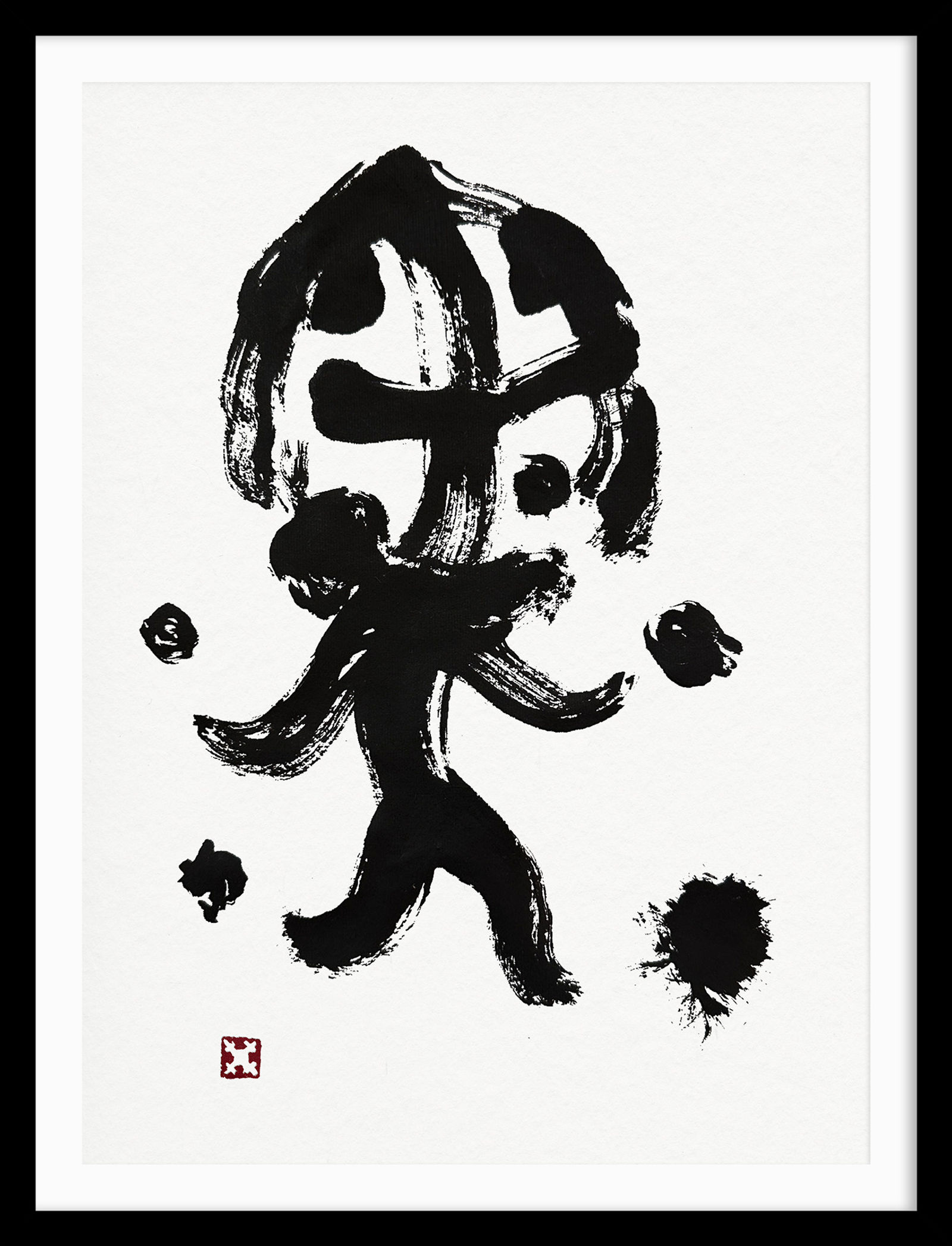
Working across ink painting, sculpture, performance and installation, Mew traces characters back to their earliest pictorial forms—when written language was closely connected to drawings of people, animals, nature and everyday life. Through gesture, material and experimentation, he reimagines these ancient forms as living, expressive works for contemporary audiences.
His practice has been developed through exhibitions, residencies and projects across Australia and Japan.
Available to Bid
I don’t want ancient characters to remain relics of the past. I want them to move, breathe and take on new lives in the present.


What medium do you work with, and why have you chosen them?
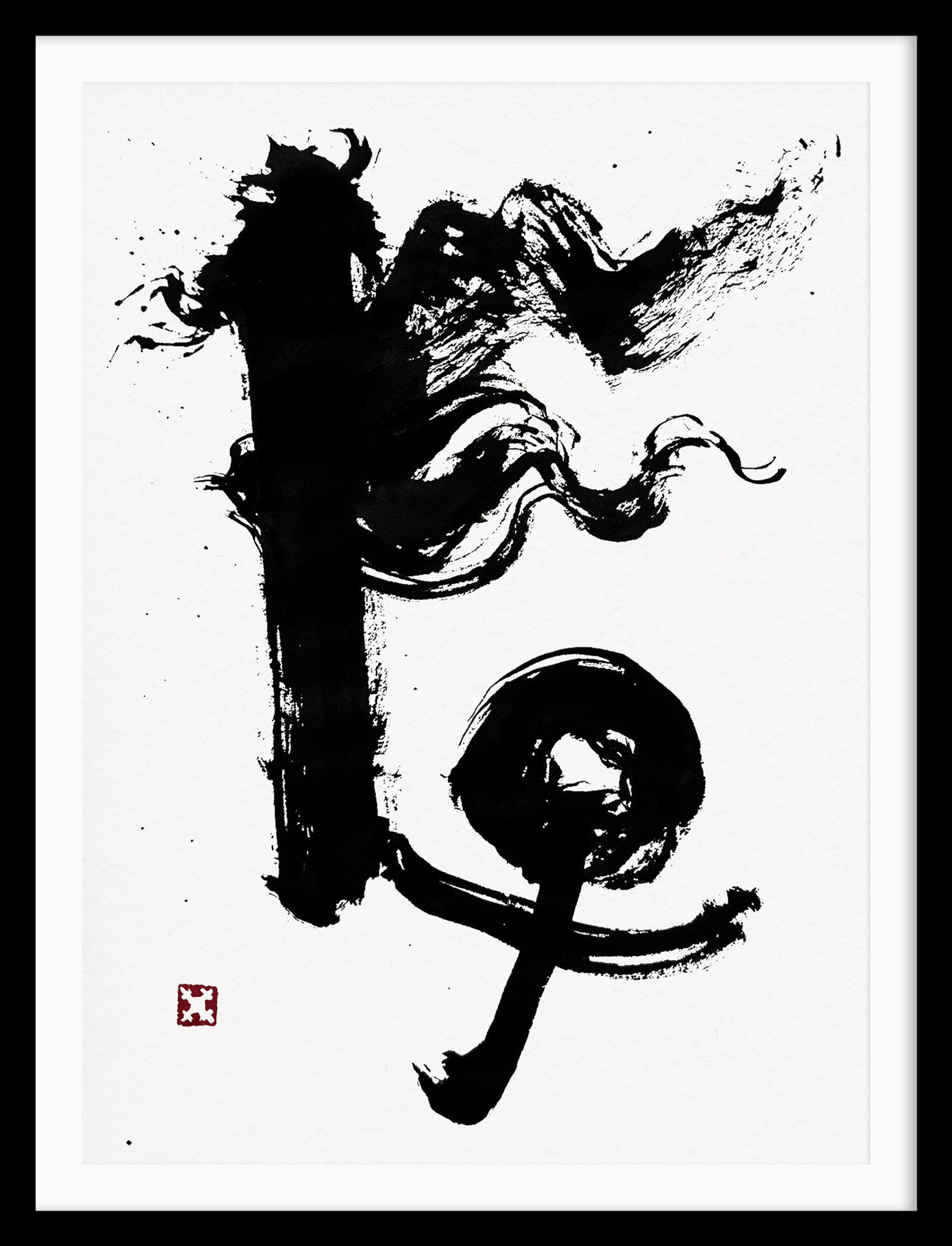
Ink and paper remain at the heart of my practice. I work primarily with traditional East Asian materials such as sumi ink, Xuan and washi paper, and calligraphy brushes, but increasingly bring these into conversation with sculpture, light, shadow, performance and installation.
I love ink because it records movement so honestly. A brushstroke captures speed, pressure, hesitation and confidence in a single gesture. Once it touches the paper, there is very little opportunity to correct it.
More recently, sculpture and installation have allowed me to take characters beyond the flat surface. They can stand, move, cast shadows and occupy space, giving these ancient forms a new physical presence.
How does your artwork get from initial concept to exhibition stage?
Most works begin with research. I trace a contemporary Chinese character backwards through different historical forms, studying ancient inscriptions and the images, stories and ideas from which it developed.
From there, I sketch and repeatedly practise the character until I understand its structure physically, not just intellectually. I then begin pulling it apart—changing its scale, gesture, material or relationship to space.
Depending on the project, the final work might become an ink painting, sculpture, installation or performance. By the exhibition stage, I want the historical research to feel almost invisible: the viewer doesn't need to know everything I researched to connect with the work, but the history gives every gesture a reason for being there.
Can you tell us a little more about your creative working environment/studio?
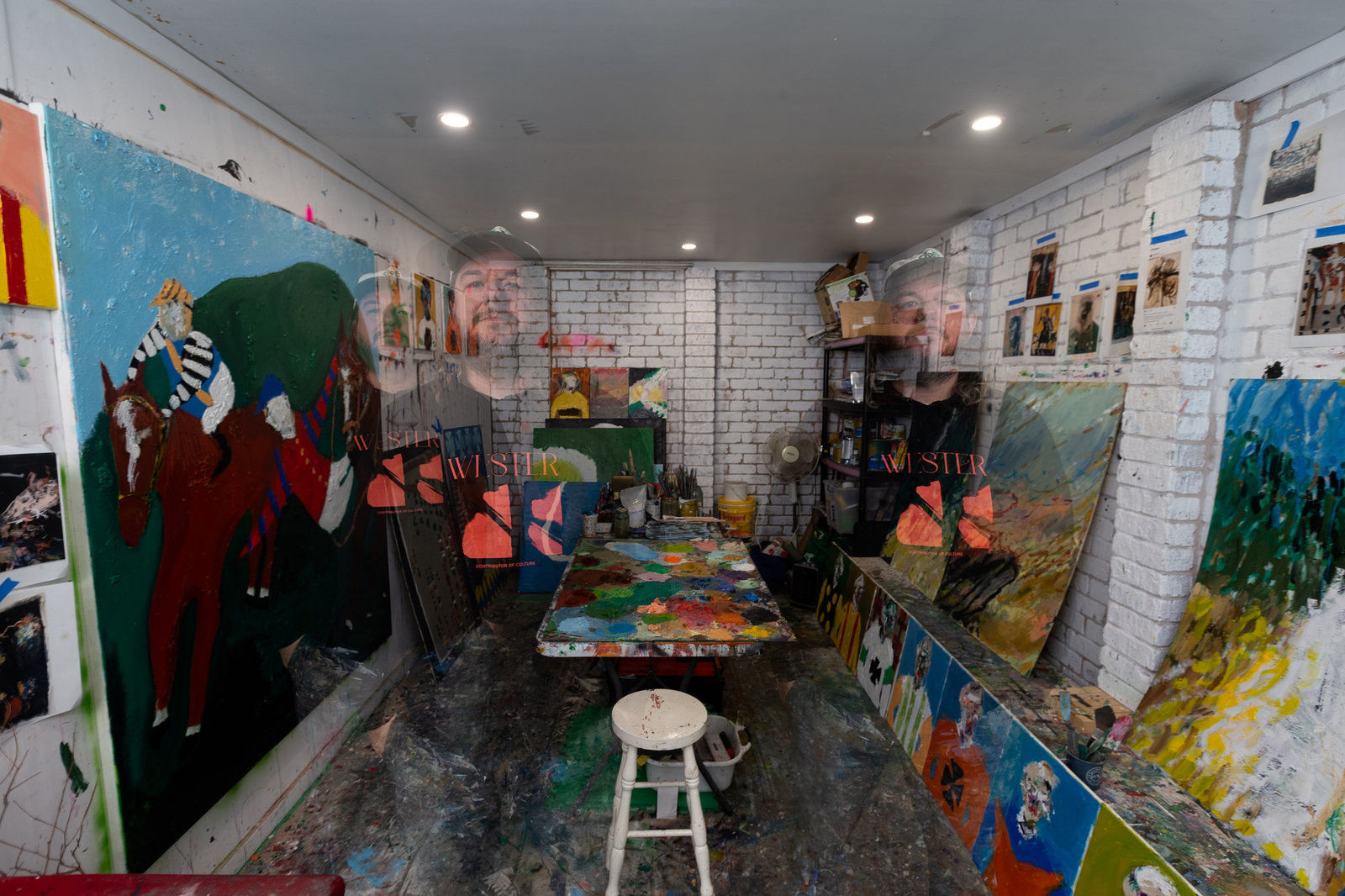
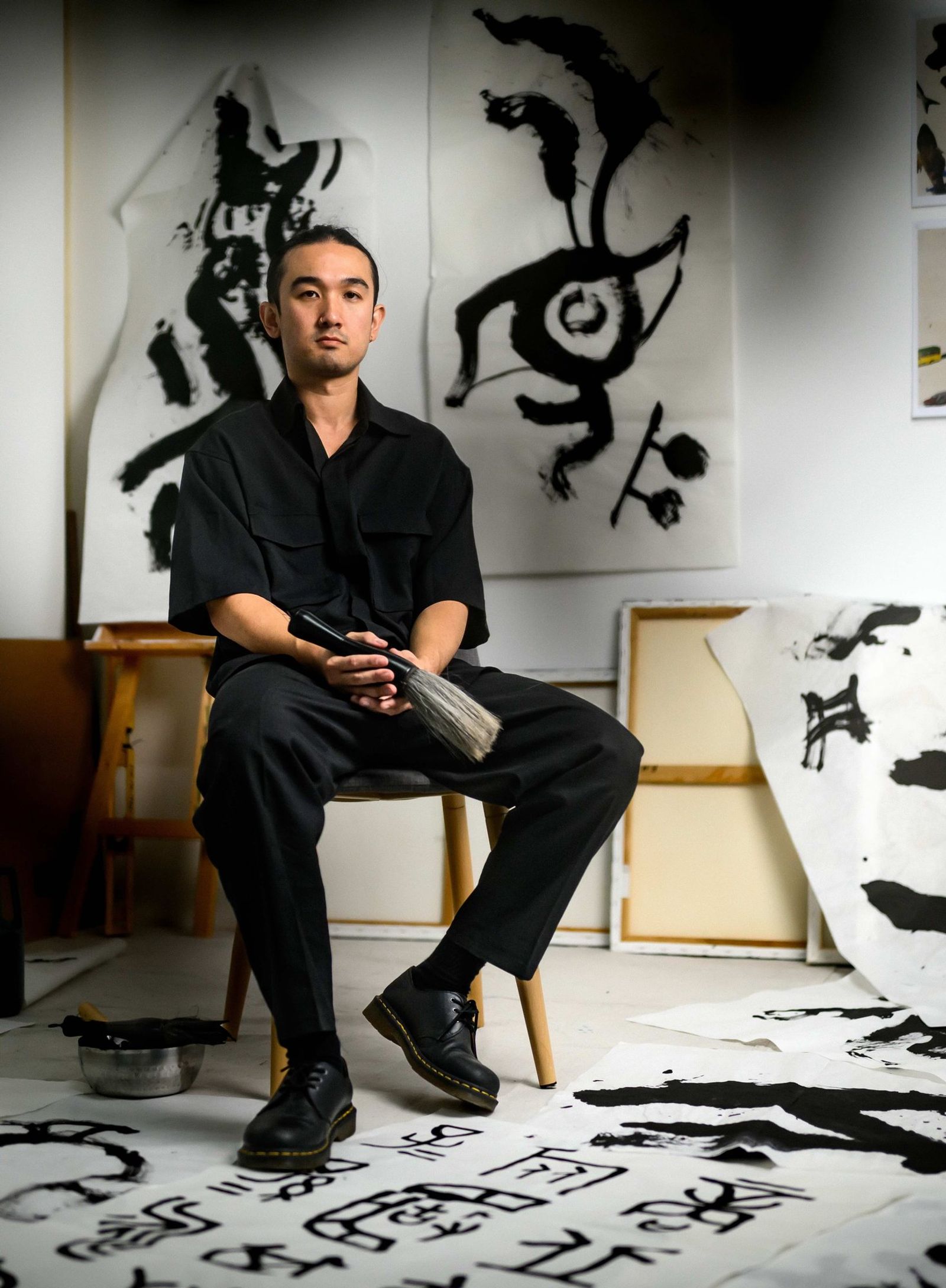
My studio in Sydney is somewhere between a painting studio, workshop and research space. There are large brushes, ink stones and stacks of paper alongside sculptures, casting materials, books and experiments that haven't quite become artworks yet.
I like having enough space to work physically. Some of my brushes and sheets of paper are very large, so painting can involve my entire body rather than just my wrist or hand.
The studio is also where a lot of failure happens. I might paint the same character dozens of times before one gesture feels right. Those discarded sheets are an important part of the process, they allow the final work to feel spontaneous even when years of practice sit behind it.
Tell us a bit about your story and how you came to be an artist
I was born in Hong Kong, grew up in Sydney, and later spent several years living and working in Tokyo. Moving between these places shaped the way I thought about language, culture and belonging.
My relationship with calligraphy began as an exploration of my cultural heritage, but over time I became fascinated by what existed before calligraphy as we recognise it today. I started researching the earliest forms of Chinese characters, some dating back more than 3,000 years, and discovered a world where writing and drawing were almost inseparable.
A character for sun could be a drawing of the sun. A character for fish resembled a fish. Beauty emerged from the image of a sheep. These discoveries completely changed the direction of my practice.
Today, my work is about bringing those ancient forms back to life, not by reproducing the past, but by asking what they can become in the present.
How would you describe your creative process?
Research, repetition, experimentation and release.
I spend a lot of time researching a character and practising its form before making a finished work. Repetition allows the movement to become instinctive, so when I finally approach the paper I can stop thinking about how to paint the character and respond more intuitively.
There is an interesting contradiction in this process: a finished brushstroke might take only a few seconds to make, but reaching those few seconds can take days, months or even years of practice.
What inspires you?
I’m fascinated by the idea that something written thousands of years ago can still be understood, transformed and felt today.
Much of my inspiration comes from researching ancient Chinese characters and discovering the surprisingly human stories behind them: drawings of animals, bodies, weather, tools, rituals and everyday life that gradually evolved into written language.
I’m equally inspired by movement, nature and the physical act of making. Living between Hong Kong, Sydney and Tokyo has also shaped the way I think about cultural memory: what we inherit, what we lose, and how traditions can evolve without becoming fixed in the past.
How would you describe your artistic style?
Gestural, contemporary and deeply rooted in tradition.
My work sits somewhere between calligraphy, abstraction and contemporary installation. Visually, I’m drawn to bold black forms, expressive movement and negative space. Although the works often feel spontaneous and minimal, their forms are grounded in extensive research into ancient Chinese writing.
I like that they can be experienced in two ways: from a distance as abstract compositions, and up close as characters carrying thousands of years of history.
What message and emotion do you hope to convey with your work?
I hope people experience a sense of curiosity and discovery.
You don't need to read Chinese or understand calligraphy to connect with my work. In fact, I often enjoy the moment before someone knows what a character means, when they simply see a body, animal, movement or shape within it.
Ultimately, I want my work to show that tradition doesn't have to be static. These characters have survived because they have continuously changed for thousands of years. By reimagining them today, I hope to continue that evolution and create another point of connection between the past and the present.
Career Highlights
- Selected by Georges River Council to create a major Lunar New Year public artwork for Hurstville in 2026, resulting in the large-scale mural Kumquat Blessings & The Fire Horse.
- Commissioned by Aesop for its 2026 Lunar New Year campaign, creating window installations and live calligraphy performances across flagship locations in Sydney and Melbourne.
- Selected for the Swatch Art Peace Hotel Artist Residency in Shanghai, alongside an ongoing international practice spanning exhibitions and creative projects across Australia and Japan.