Acrylic Painting
Karen Preston
Subjects | Abstract, Expressionism, Impressionism, Painting
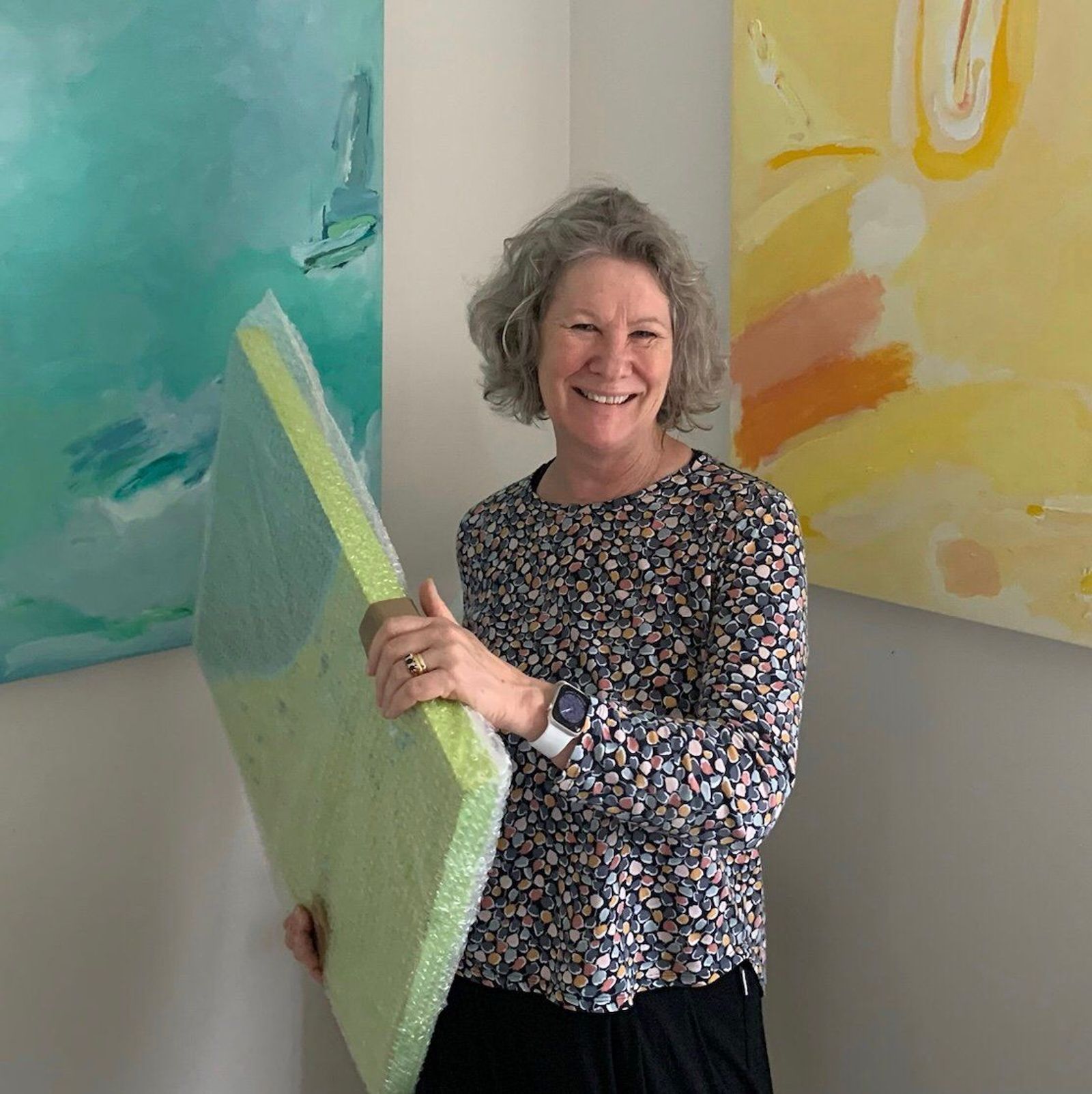
Karen Preston is an Australian artist whose work explores themes of excess, interconnectedness and transformation. She creates abstract compositions informed by the layered complexities within coastal ecologies.
Karen Preston is an Australian artist whose work explores themes of excess, interconnectedness and transformation. She creates abstract compositions informed by the layered complexities within coastal ecologies. Through her art making Karen explores alternative ways of imagining and seeing the environments that we live in. Her work is characterised by a meditative quality, with each piece inviting contemplation and introspection. Her work is held in public and private collections and has been celebrated for its ability to evoke calm and reflection. Karen has qualifications in the Visual Arts, Education and Social Sciences, she is the recipient of a number of awards, has held three solo exhibitions and is a regular participant in group shows.
Available to Bid
Art is an opportunity to see and imagine the world and ourselves differently.

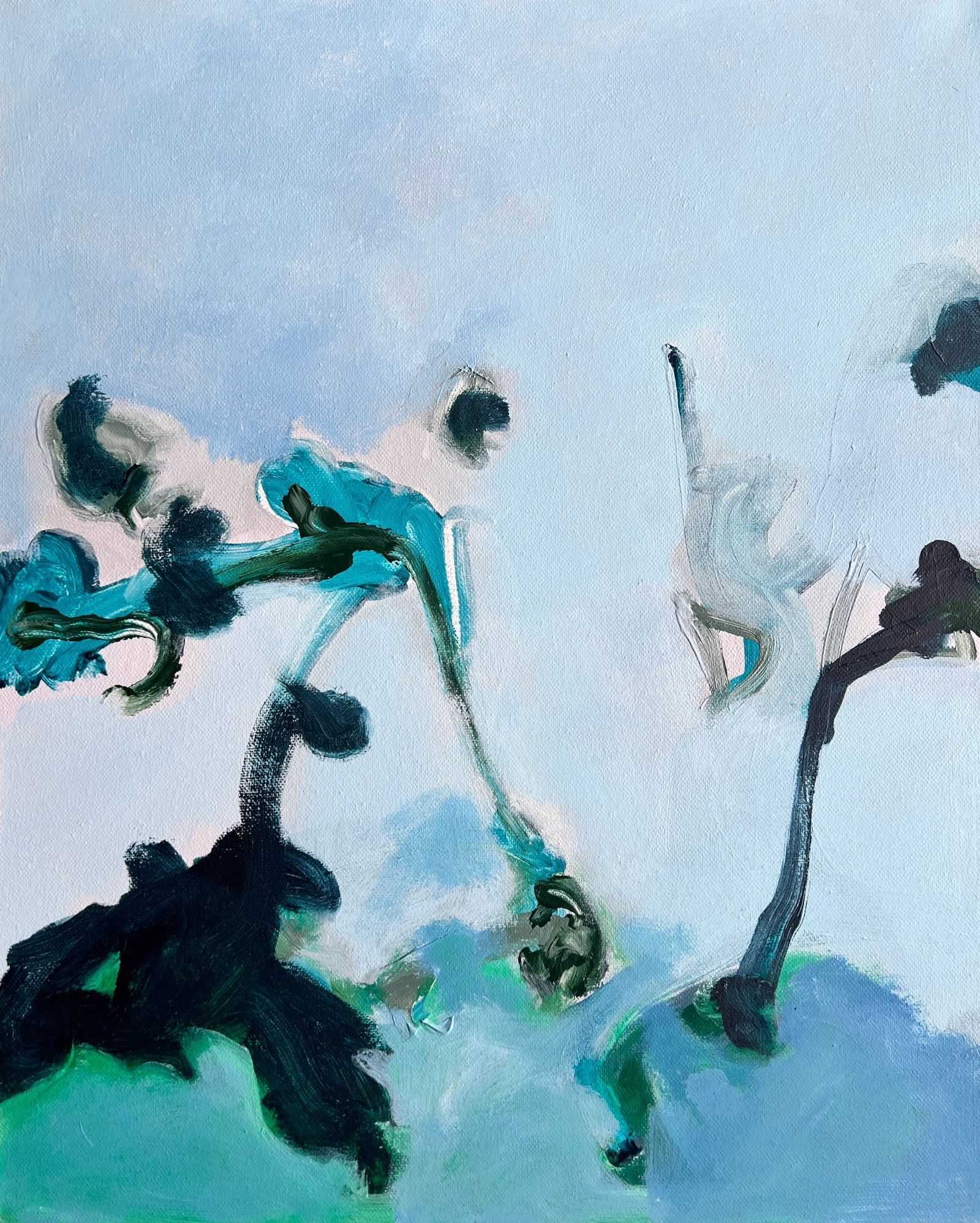
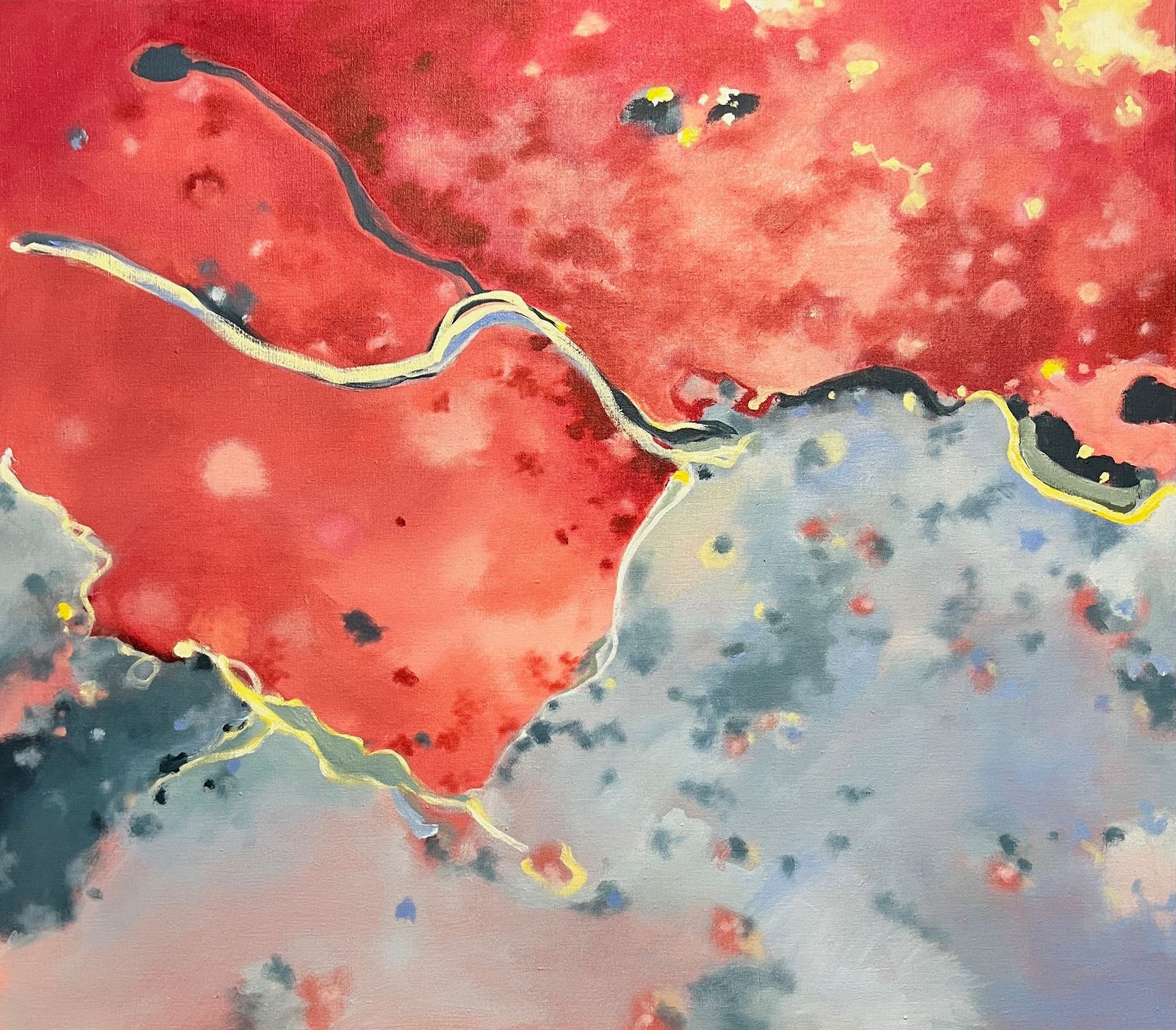
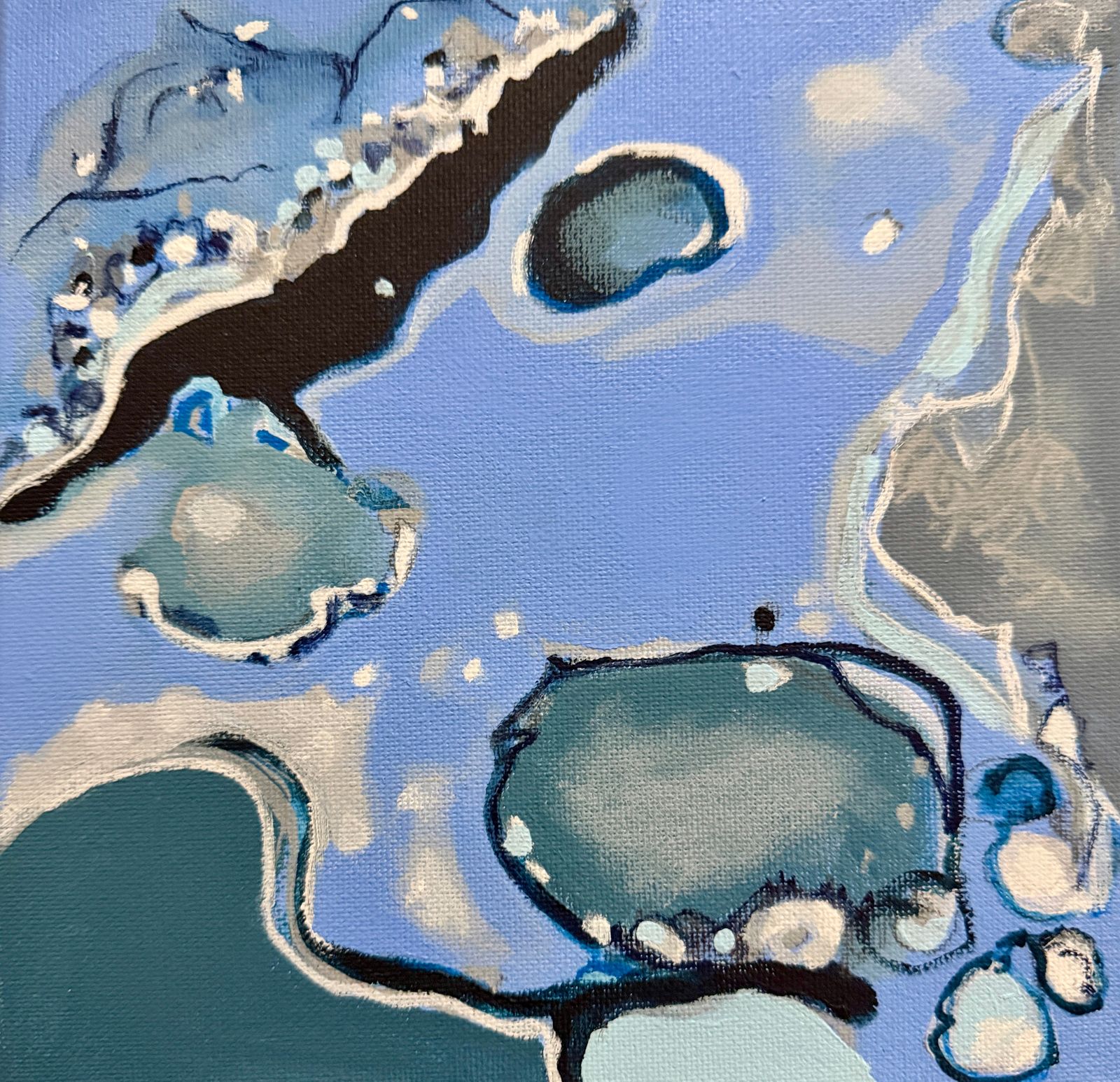
What medium do you work with, and why have you chosen them?
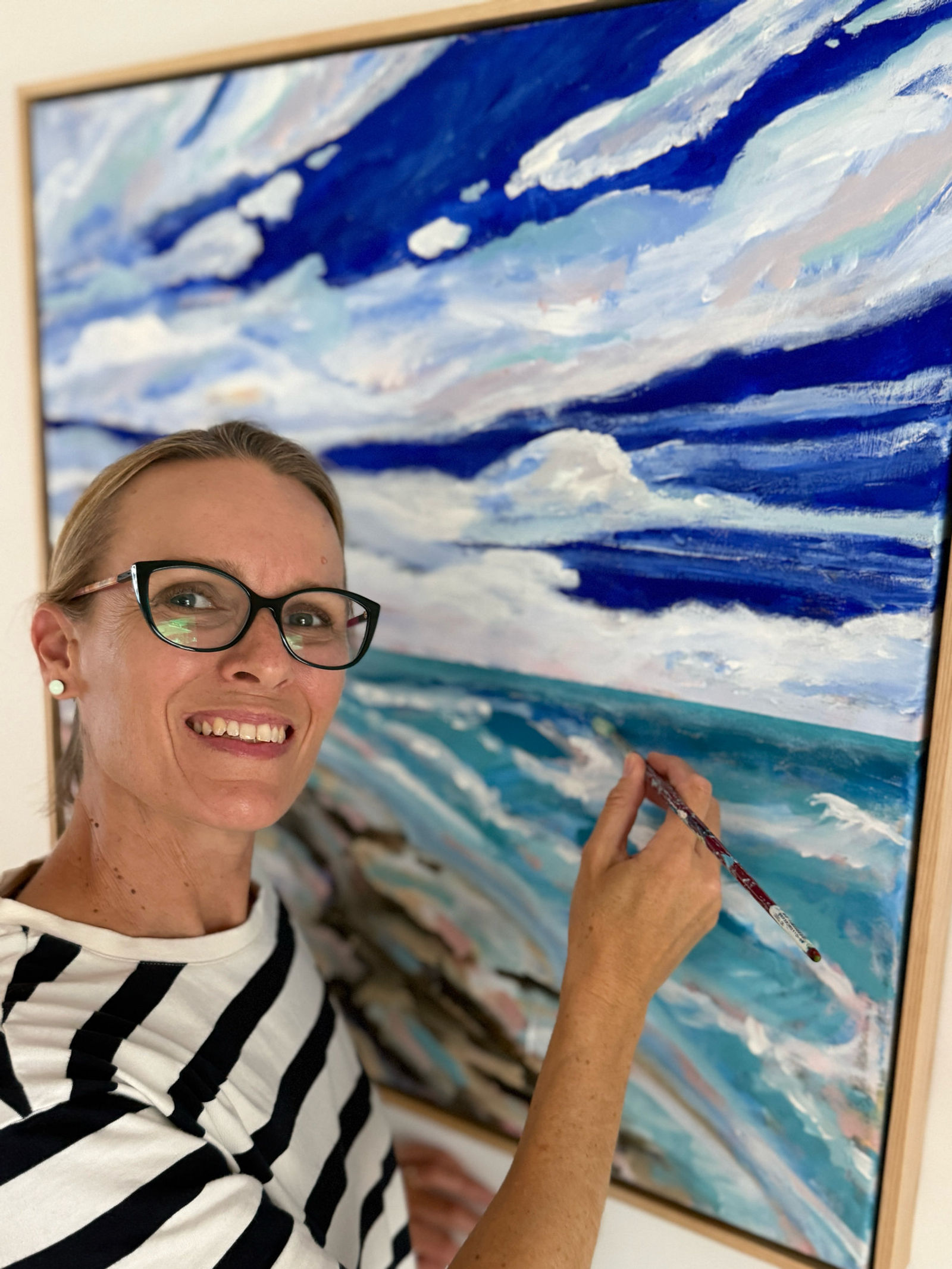
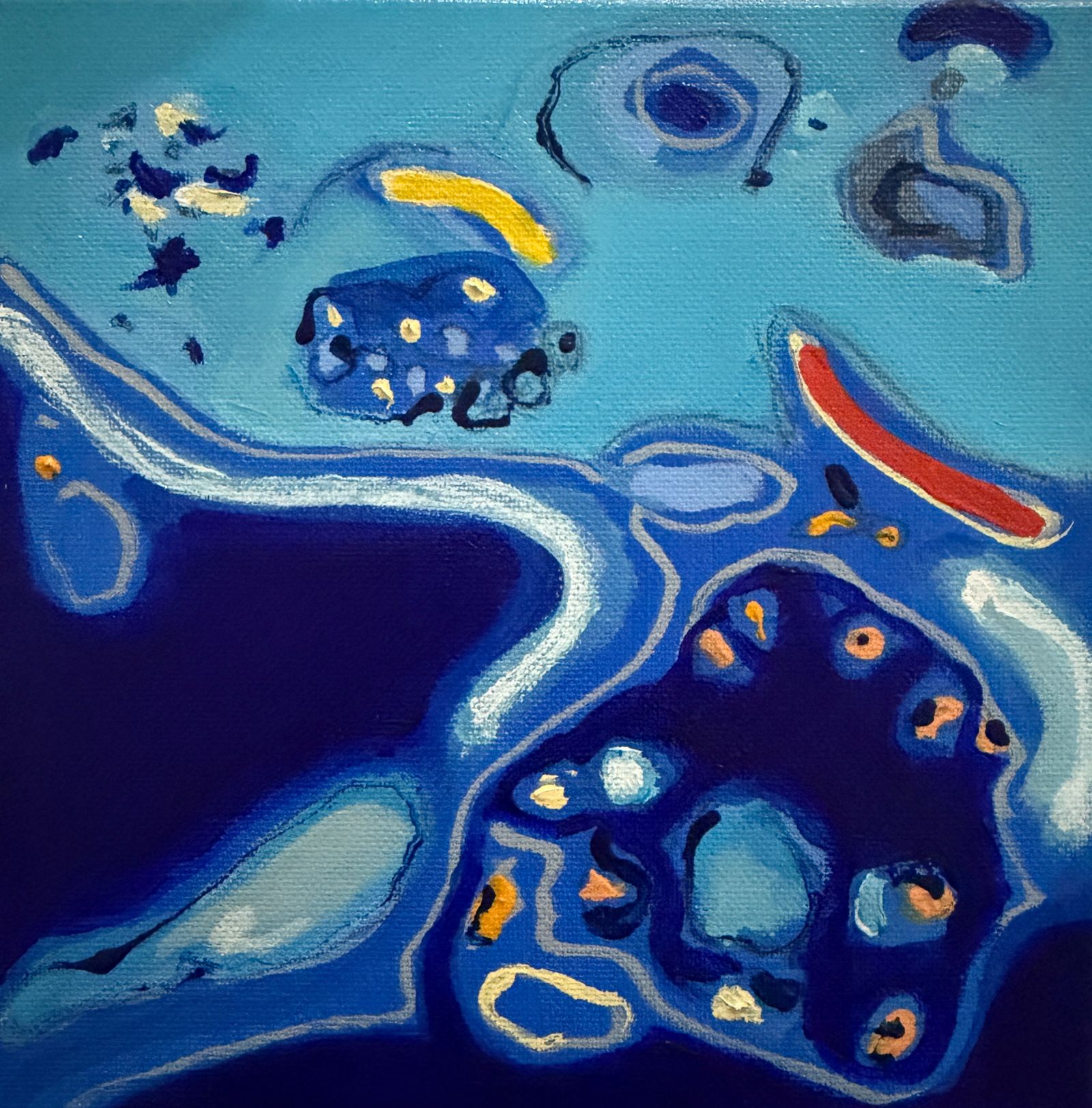
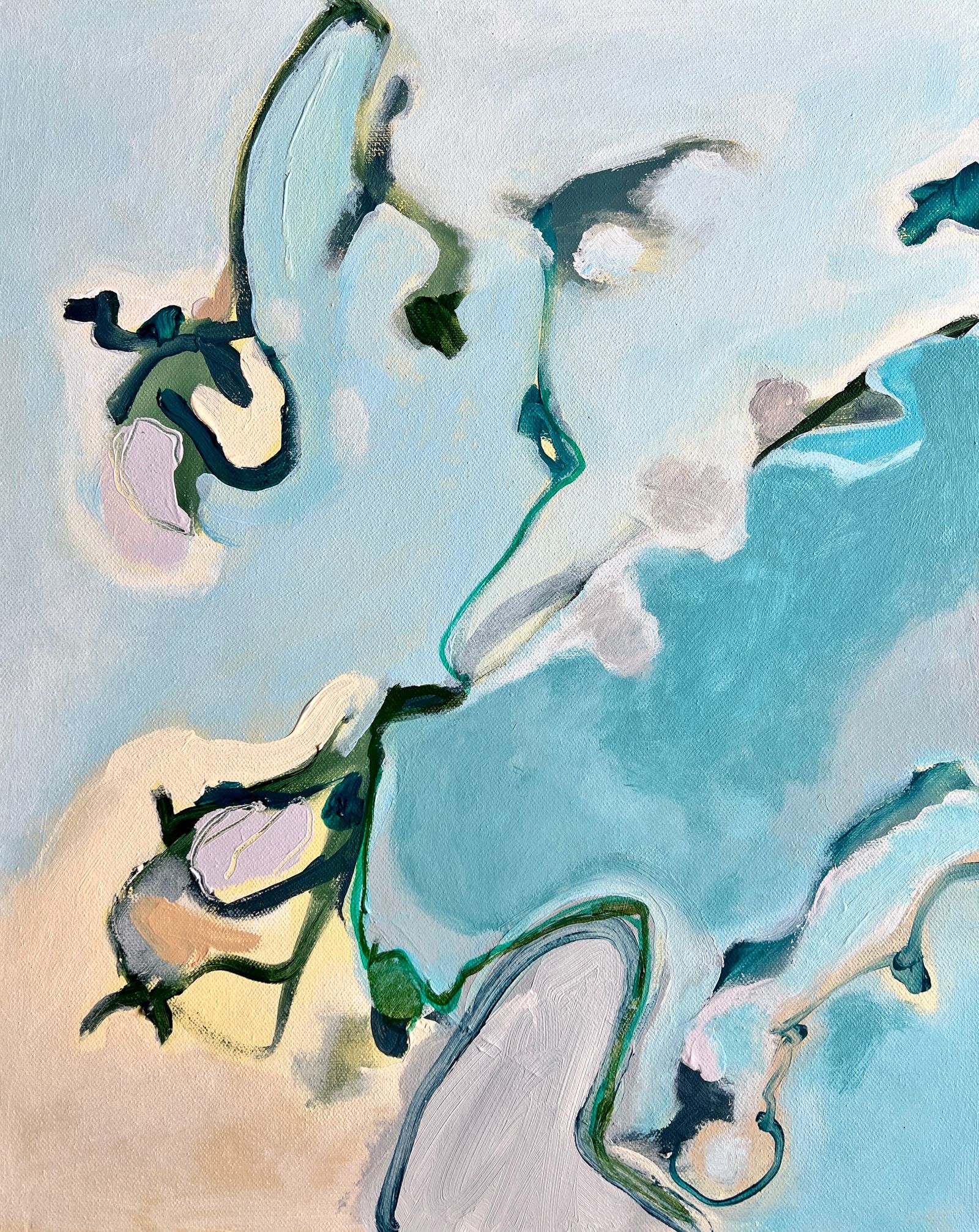
I mainly paint with acrylics on canvas or linen, as they dry quickly and it is easy to build up layers. I use waste materials like plastic and paper in my 3D works, for environmental reasons, and also because I like the malleability of plastic. Recently I have been making sculptures with single use plastic packaging and paper mache.
How does your artwork get from initial concept to exhibition stage?
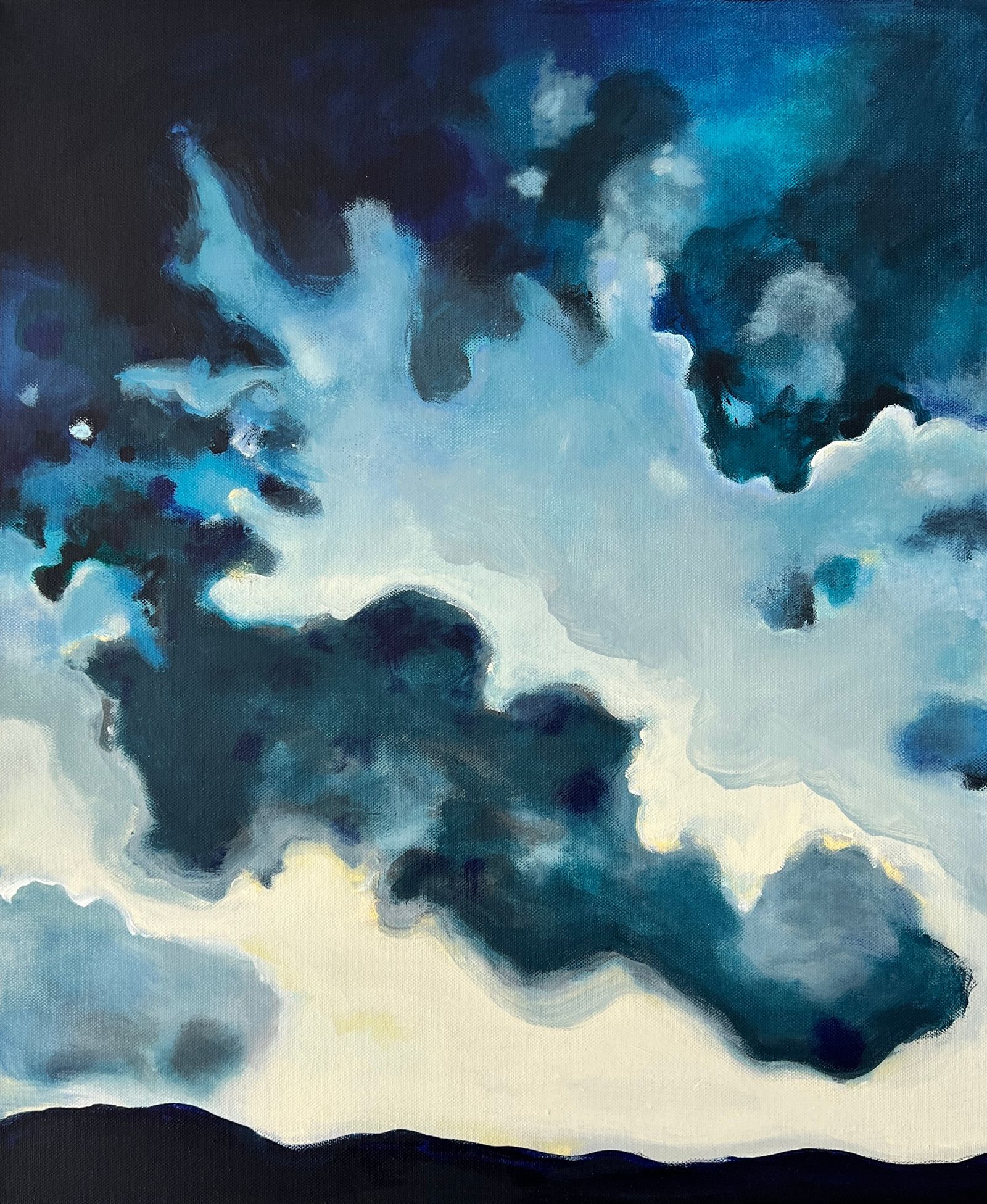
My paintings can usually be traced back to a walk on the beach. I use my iPhone to record interesting aspects of the environment, like seaweed floating in the incoming tide, patterns formed in rock pools, accumulations along the tide line or light filtering through sea water. Back in the studio I select sections of the images, and enlarge and print them. Starting with the structure of the edited image I return to the memory of where it was taken and connect with whatever is happening for me emotionally and intellectually in that moment. The fun part is translating that fusion into an art piece. It is always like a joyful dance.
Can you tell us a little more about your creative working environment/studio?
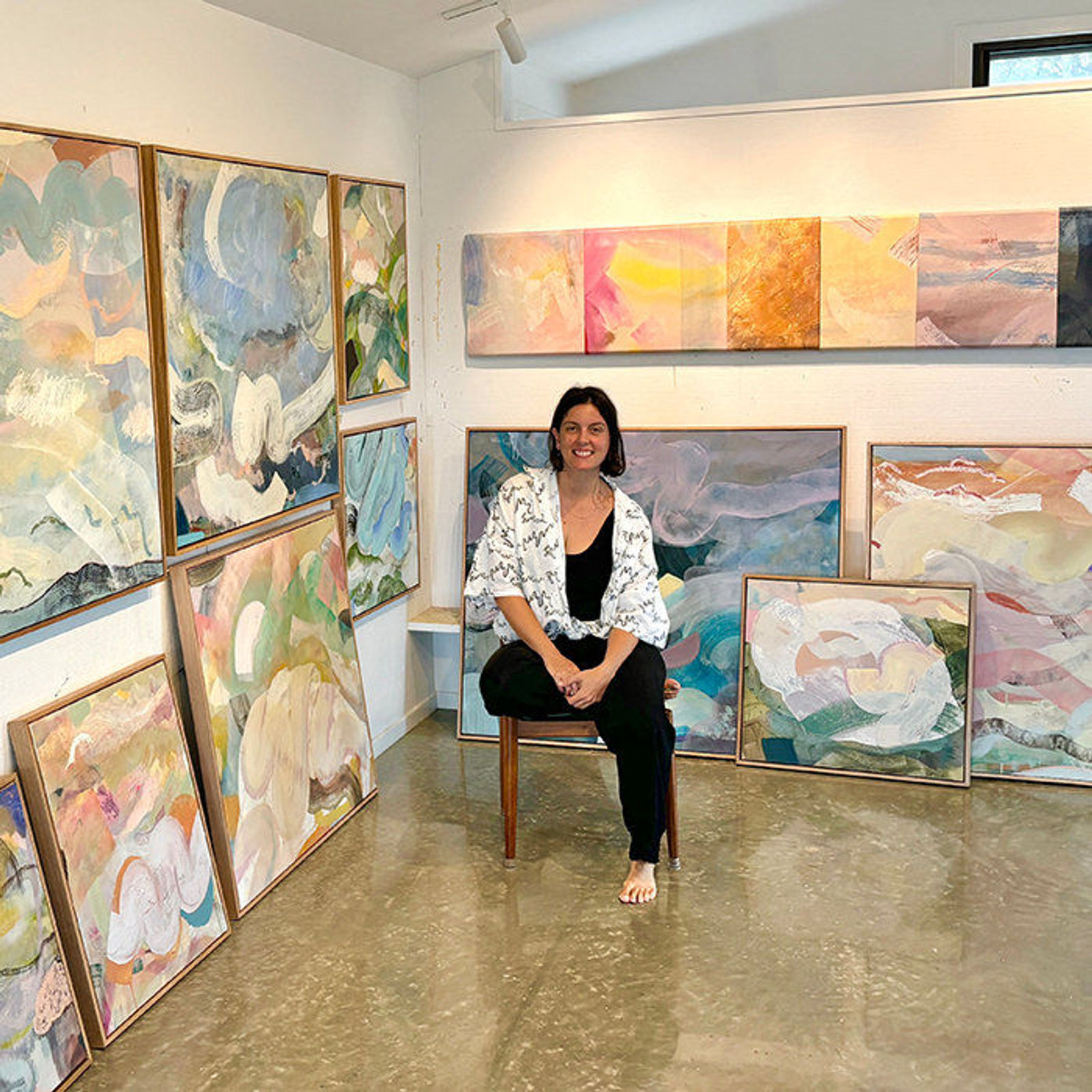
My studio, which is a room in my house, is a retreat. It is a place where I can be free from logical, rational thought and throw myself into a creative, intuitive space. I prepare by lighting incense and I always play loud music. It is full of bits and pieces that I gather as I go about life outside the studio.
Tell us a bit about your story and how you came to be an artist
I always aspired to be an artist; it is impossible for me to think about life without making art. After completing a Diploma of Art and Design at Caulfield Institute of Technology in 1978, I began to establish my art practice with several group shows in Melbourne and on the Mornington Peninsula, resulting in purchases by Artbank and Trinity College, Melbourne University, together with a number of private commissions. In 1994 I paused my focus on building my career as an artist to take up a position as an academic at Monash University in Gippsland. I retired from full-time work to refocus on my art practice in 2017.
How would you describe your creative process?
My creative process might be described as eclectic-unbridled and energetic in some ways, and mindful and meditative in others. I have many art pathways. I like to explore new ideas, and so end up with body of work of about 6-8 pieces inspired by a particular interest, ie. tidelines, rock pool patterns or light floating, then a fascinating element will emerge and I'll focus on following its path. Rather than a linear trajectory, my process is more meandering, like a patchwork quilt of various patterns made from similar but different pieces of fabric. Ultimately, however all my works are threaded together in some way. Making art is always a journey of discovery, I try to pay attention to, and bring the unseen into focus.
What inspires you?
I am inspired by the natural environment, especially water in all its amazing forms. I also love gathering sticks that fall from eucalypts, the sight of light passing through leaves, the sky changing across the day, the way it feels to be present when magpies warble, or the wind stills.
How would you describe your artistic style?
My work has been described as abstract impressionism. Sometimes it is minimalist. I aim to produce work that is more than an aesthetic object for display.
What message and emotion do you hope to convey with your work?
I like to think of my paintings as offering spaces of retreat and refuge. I hope that my art encourages viewers to look beyond what they see in front of them, to think about more than the surface, to consider alternatives to taken for granted assumptions about how something 'should' look, to seek out the spaces between and beneath things.
Career Highlights
- Best painting and best body of work awards, Arts Society of Phillip Island Region, 2023.
- One of three artists selected for the Contemporary Gippsland Artists exhibition at Kelly & Gemelli Gallery, 2023.
- Solo Exhibition, Switchback Gallery, Churchill, Victoria, 2019.